
 Cataract
 Glaucoma
 Retina
 Lasik
 SMILE
 SMILE Pro
 Asu Biswas Kanika Biswas Foundation
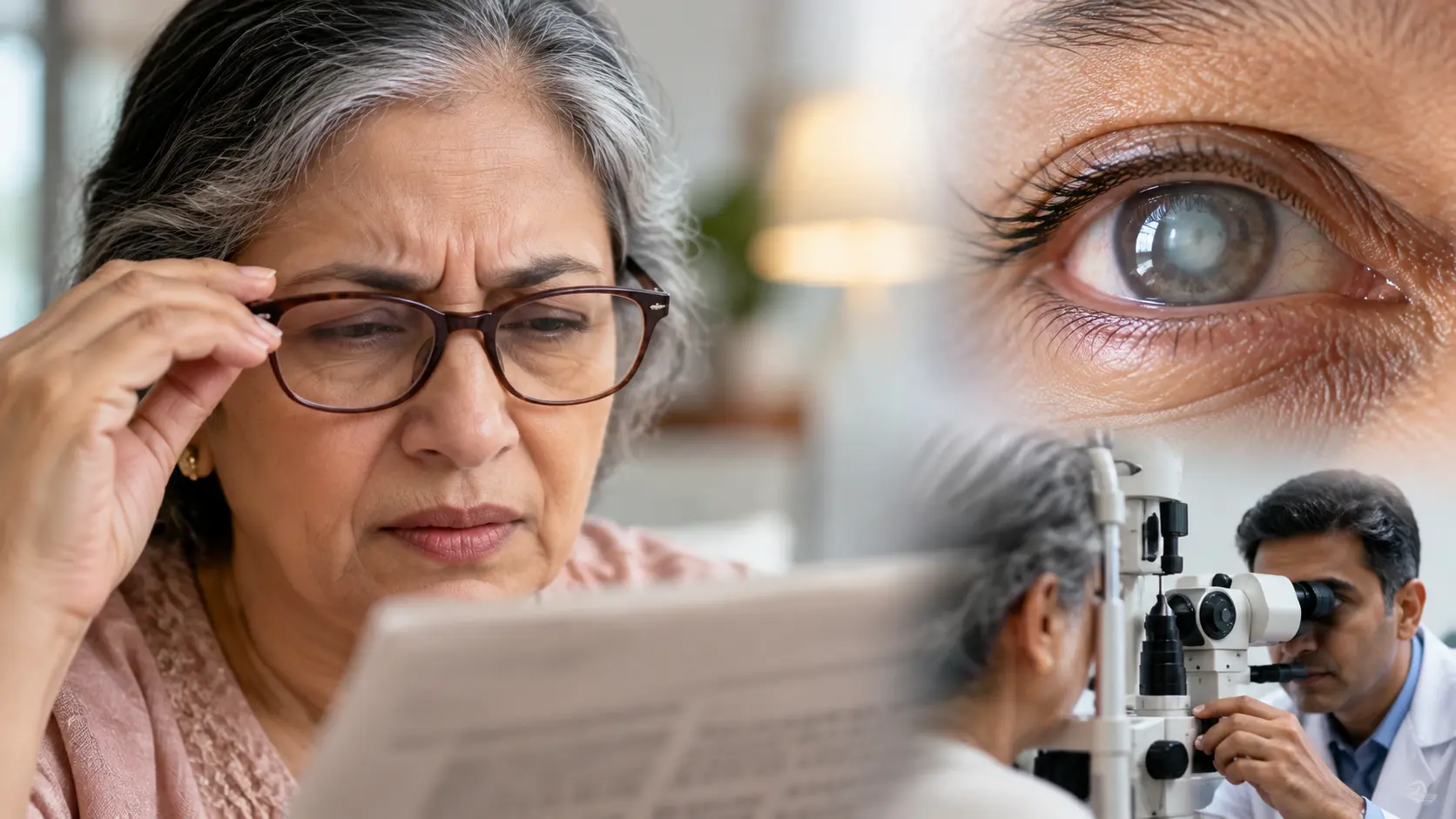
What Is a Cataract?
A cataract develops when the normally transparent natural lens inside the eye becomes cloudy. The lens helps focus light onto the retina, which sends visual information to the brain.
When the lens becomes cloudy, light cannot pass through it as clearly as before. As a result, vision may become blurred, hazy or less vivid.
Age-related changes are the most common cause of cataracts. However, cataracts can also develop in association with diabetes, certain medications, previous eye injuries or other eye conditions.
Cataracts may affect one eye or both eyes, and the symptoms may not be equally noticeable in each eye.
Although cataracts are more common as people get older, a change in vision should not automatically be attributed to ageing. An eye examination is necessary to identify the actual cause.
7 Early Signs of Cataracts You Should Know
Cataract symptoms usually develop gradually. The following changes may indicate that it is time to schedule an eye examination.
1. Blurry or Cloudy Vision
One of the most common signs of cataracts is blurred or cloudy vision.
You may feel as though you are looking through a foggy window. Printed text may appear less sharp, distant objects may become difficult to recognise, or familiar surroundings may seem hazy.
Initially, these changes may be mild. As the cataract progresses, they can interfere with activities such as reading, watching television or recognising faces.
When to consult an eye specialist: If your vision remains blurry, becomes progressively worse or does not improve with your usual glasses, arrange an eye examination.
Blurred vision can have several causes, so it is important not to assume that a cataract is responsible without a proper assessment.
2. Difficulty Seeing at Night
Have you started finding it harder to see clearly while driving after sunset?
Cataracts can reduce visual clarity in low-light conditions. You may find it difficult to recognise objects in dimly lit rooms, read in the evening or navigate unfamiliar places at night.
Night driving may become particularly challenging when combined with glare from vehicle headlights.
If night vision has deteriorated, avoid driving in conditions where you cannot see safely and consult an eye specialist.
3. Increased Sensitivity to Light and Glare
Another possible early symptom of cataracts is increased sensitivity to bright light.
Sunlight, headlights, streetlights or bright indoor lighting may seem unusually uncomfortable. You may also notice halos around lights or find that glare interferes with your ability to see clearly.
These symptoms can affect everyday activities, particularly driving at night or spending time outdoors in bright sunlight.
Persistent glare or light sensitivity deserves an eye examination because these symptoms can also occur with other eye conditions.
4. Colours Appear Faded or Yellowish
Have white objects started looking slightly yellow, or do colours seem less bright than they used to?
As the natural lens becomes cloudy or changes colour, it may affect how you perceive colours and contrast.
You might notice that clothes appear less vibrant, printed images look dull or it becomes harder to distinguish similar shades.
These changes may develop so gradually that you do not recognise them until they begin affecting everyday tasks.
If you notice a persistent change in colour perception, an eye specialist can assess whether cataracts or another condition may be responsible.
5. Frequent Changes in Your Spectacle Prescription
Some people with developing cataracts notice that their existing glasses no longer provide clear vision.
You may find yourself visiting an optical shop more frequently because your spectacle number seems to be changing. A new prescription may improve vision temporarily, but it may not resolve the underlying problem if a cataract is developing.
Frequent prescription changes do not necessarily mean you have cataracts. However, repeated changes accompanied by blurred vision or glare are a good reason to arrange a comprehensive eye examination.
6. Double Vision or Ghost Images in One Eye
Cataracts can sometimes cause double vision or a ghost-like image when looking at an object with the affected eye.
For example, letters may appear to have a faint shadow, or a single object may seem to have an overlapping outline.
Double vision can also result from other eye or neurological conditions. Sudden onset of double vision requires prompt medical assessment, particularly when accompanied by severe headache, weakness, difficulty speaking or other new neurological symptoms.
Do not self-diagnose this symptom as a cataract.
7. Difficulty Reading or Performing Everyday Activities
Early cataracts may gradually make routine activities more difficult.
You may notice that you need brighter lighting to read a newspaper, struggle to see television subtitles, have difficulty recognising faces from a distance or find that your usual hobbies require more effort.
These changes can affect independence and confidence, particularly in older adults.
If vision problems begin interfering with your daily routine, it is worth visiting an eye specialist even if the symptoms do not seem severe.
Who Is at Risk of Developing Cataracts?
Age is an important risk factor, but cataracts do not affect everyone at the same age or progress at the same rate.
Factors associated with an increased risk of cataracts include:
- Increasing age: Natural changes in the lens make cataracts more common as people get older.
- Diabetes: People with diabetes have an increased risk of developing cataracts.
- Smoking: Tobacco use is associated with a higher risk of cataracts.
- Prolonged ultraviolet exposure: Spending considerable time in sunlight without adequate eye protection may increase risk.
- Previous eye injury or surgery: Certain injuries and eye procedures can contribute to cataract development.
- Certain medications: Long-term corticosteroid use, for example, may increase the risk.
- Family history: A family history of cataracts may be relevant to your individual risk.
Having one or more risk factors does not mean you will definitely develop cataracts. Regular eye examinations can help identify changes in the lens and other eye conditions.
If you have diabetes or another condition that affects eye health, ask your doctor how frequently you should have your eyes examined.
When Should You Visit an Eye Specialist for Cataracts?
You should arrange an eye examination if you notice persistent or progressive changes in your vision, including:
- Blurred or cloudy vision.
- Difficulty seeing clearly at night.
- Increasing glare from headlights or bright lights.
- Colours appearing faded or yellowish.
- Frequent changes in your spectacle prescription.
- Difficulty reading or performing routine activities.
You do not need to wait until your vision becomes severely affected before seeking an assessment.
Important: Sudden loss of vision, a sudden major deterioration in eyesight, a painful red eye or sudden visual changes accompanied by flashes or a curtain-like shadow require urgent medical assessment. These symptoms are not typical of an uncomplicated age-related cataract and may indicate a more serious eye problem.
How Are Cataracts Diagnosed?
An ophthalmologist can examine your eyes to determine whether a cataract is present and assess whether another condition may be affecting your vision.
Depending on your symptoms and medical history, the examination may include the following.
1. Vision Test
A visual acuity test measures how clearly you can see letters or symbols at different distances. The specialist may also assess whether your vision improves with an updated spectacle prescription.
2. Slit-Lamp Examination
A slit lamp is a specialised microscope that allows the ophthalmologist to examine the front structures of the eye, including the natural lens, for signs of clouding.
3. Dilated Eye Examination
Eye drops may be used to widen the pupils so the ophthalmologist can examine the lens, retina and other structures at the back of the eye.
This is important because conditions other than cataracts can also cause vision problems.
4. Additional Tests When Required
If cataract surgery is being considered, further measurements may be performed to assess the eye and calculate the appropriate power of the artificial intraocular lens that may be implanted during surgery.
The specific tests depend on the patient’s clinical findings and treatment plan.
Can Early Cataracts Be Treated Without Surgery?
The management of cataracts depends on how much they affect your vision and everyday activities.
When cataracts are mild, an ophthalmologist may recommend practical measures such as:
- Using brighter lighting for reading and close work.
- Wearing appropriate sunglasses to reduce glare.
- Updating your spectacle prescription when suitable.
- Attending follow-up examinations to monitor changes.
These measures may help you manage symptoms, but they do not remove the cataract.
At present, surgery is the established treatment that removes a cataract. However, not every person diagnosed with a cataract needs immediate surgery.
The decision depends on your visual needs, the degree of lens clouding, the effect on daily activities and the findings of your eye examination.
Do not use unprescribed eye drops or supplements claiming to dissolve cataracts.
When Is Cataract Surgery Recommended?
Cataract surgery may be recommended when the clouding of the natural lens significantly interferes with daily activities or when the ophthalmologist identifies another clinical reason for treatment.
During the procedure, the cloudy natural lens is removed and replaced with an artificial intraocular lens, commonly known as an IOL.
The ophthalmologist discusses the available surgical approach and lens options based on the patient’s eye measurements, lifestyle, visual requirements and overall eye health.
Options may include conventional phacoemulsification and, for suitable patients, femtosecond laser-assisted cataract surgery. The choice of technique depends on the individual case and the surgeon’s assessment.
Cataract surgery can improve vision affected by cataracts, but the final visual result also depends on the health of other eye structures, including the retina and optic nerve.
A consultation can help you understand the potential benefits, limitations, risks and expected recovery associated with surgery.
Can Cataracts Be Prevented?
There is no guaranteed way to prevent every cataract, particularly those associated with ageing. However, certain habits may help protect overall eye health and reduce some risk factors.
Consider the following measures:
- Wear sunglasses that provide appropriate ultraviolet protection when outdoors.
- Avoid smoking.
- Eat a balanced diet that includes vegetables, fruits and other nutrient-rich foods.
- Manage diabetes and other medical conditions with appropriate professional care.
- Use protective eyewear during activities that could injure your eyes.
- Attend regular eye examinations according to your age, medical history and doctor’s advice.
These steps support eye health but cannot guarantee that cataracts will not develop.
Frequently Asked Questions About Cataracts
1. What is usually the first sign of cataracts?
Some people initially notice mild blurring, cloudy vision, glare or difficulty seeing at night. Others may not notice symptoms in the early stages. A comprehensive eye examination is needed to identify cataracts.
2. At what age do cataracts usually begin?
Age-related changes in the natural lens can begin in middle age, but noticeable cataract symptoms often develop later. Cataracts can also occur earlier due to diabetes, medications, injury or other factors.
3. Can cataracts develop in only one eye?
Yes. Cataracts can affect one eye or both eyes. If both eyes are affected, the severity and symptoms may differ between them.
4. Can cataracts be treated with eye drops?
Currently, eye drops cannot remove an established cataract. In mild cases, an updated spectacle prescription and adjustments to lighting may help manage symptoms. Surgery is the established treatment for removing the cloudy lens.
5. Do all cataracts require surgery immediately?
No. The timing depends on how cataracts affect your vision and daily life, along with the ophthalmologist’s findings. Many people can monitor mild cataracts before deciding on surgery.
6. Is cataract surgery the same as laser cataract surgery?
Not exactly. Conventional cataract surgery commonly uses phacoemulsification, while femtosecond laser-assisted cataract surgery uses a laser for certain steps. Both approaches aim to remove the cloudy lens and replace it with an artificial lens. Your ophthalmologist can explain which options may be appropriate for you.
7. Can diabetes increase the risk of cataracts?
Yes. Diabetes is associated with an increased risk of cataracts. People with diabetes should follow their recommended eye-screening schedule because diabetes can also affect the retina.
8. Where can I consult an eye specialist for cataracts in Kolkata?
If you are experiencing symptoms of cataracts, you can contact Trenetralaya Eye Hospital, Kolkata, to enquire about an eye examination and cataract assessment.
Consult an Eye Specialist at Trenetralaya Eye Hospital, Kolkata
Changes in eyesight should not automatically be dismissed as a normal part of ageing. Blurred vision, night-time glare, faded colours and difficulty reading may be signs of cataracts, although other eye conditions can produce similar symptoms.
A timely eye examination can help identify the cause of your symptoms and determine whether monitoring, an updated spectacle prescription or cataract surgery may be appropriate.
At Trenetralaya Eye Hospital, Kolkata, patients can seek an assessment for cataracts and discuss suitable treatment options with an eye specialist.
Notice changes in your vision? Book an eye examination at Trenetralaya Eye Hospital to understand the cause and explore the next steps for your eye health.
Visit the Trenetralaya Cataract Care page to learn more about cataract assessment and treatment options.
Medical disclaimer: This article is for general educational purposes only and does not replace professional diagnosis or individual medical advice. Consult a qualified eye specialist for assessment and treatment recommendations.
References
- National Eye Institute: Cataracts
- American Academy of Ophthalmology: What Are Cataracts?
- Trenetralaya Eye Hospital: Cataract Care


