 Cataract
 Glaucoma
 Retina
 Lasik
 SMILE
 SMILE Pro
 Asu Biswas Kanika Biswas Foundation
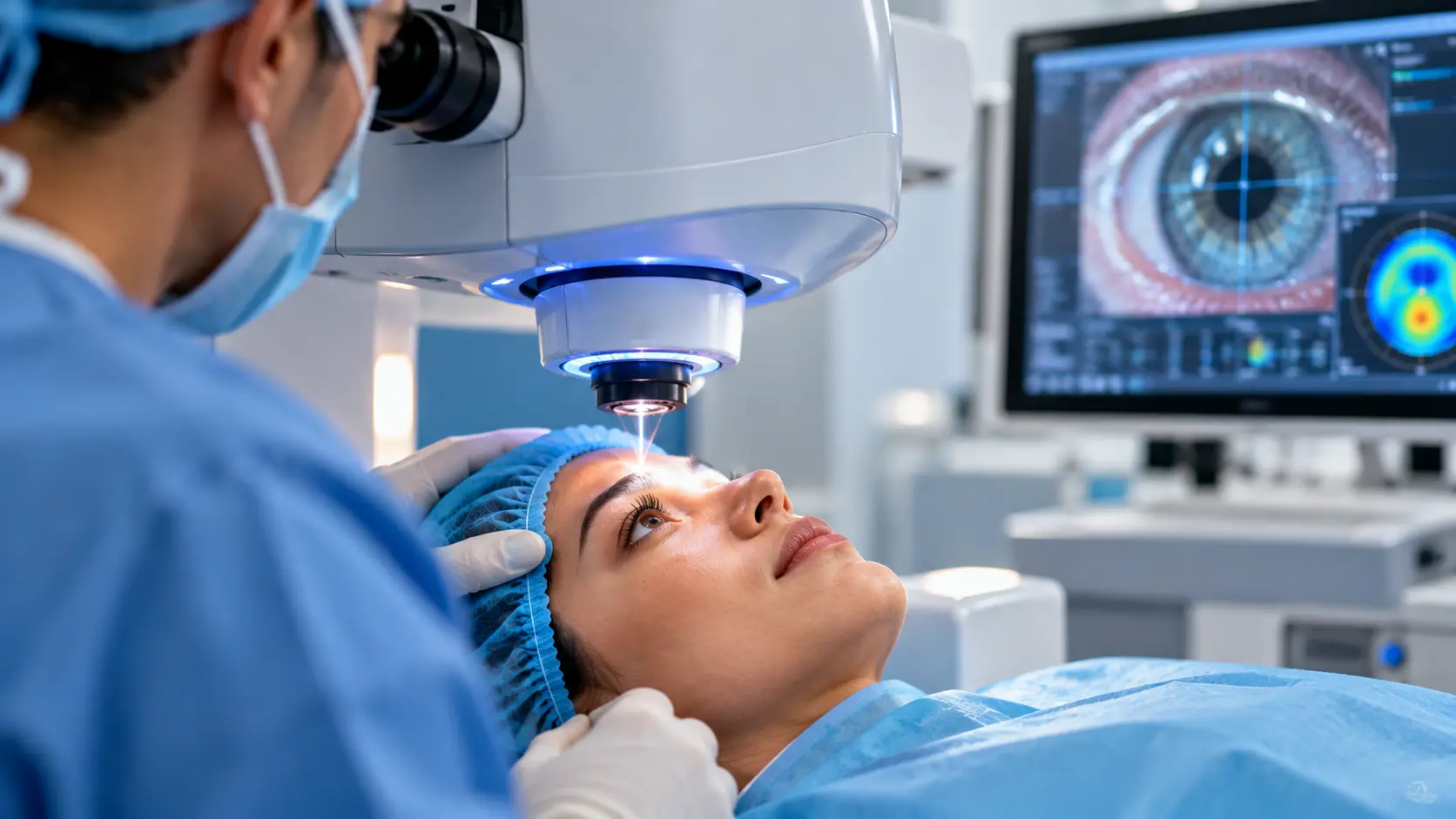
But what exactly is SMILE pro eye surgery? How does it work, who may be eligible, and what should you expect before and after the procedure? Here is a practical guide to help you understand the treatment.
What Is SMILE pro Eye Surgery?
SMILE pro stands for Small Incision Lenticule Extraction pro. It is a minimally invasive laser vision correction procedure performed using a femtosecond laser system.
The procedure involves creating a small, disc-shaped piece of corneal tissue called a lenticule. The surgeon removes this lenticule through a small incision, changing the shape of the cornea so that light can focus more appropriately on the retina.
SMILE pro is a flap-free procedure. Unlike conventional LASIK, it does not require the creation of a corneal flap.
Depending on the approved treatment indications and an individual’s clinical assessment, the procedure may be used to correct certain degrees of myopia (nearsightedness), hyperopia (farsightedness) and associated astigmatism.
The suitability of SMILE pro depends on several factors, including the patient’s prescription, corneal measurements, eye health and the treatment indications available locally.
How Does SMILE pro Work?
To understand how SMILE pro works, it helps to know how the eye focuses light.
The cornea is the transparent front surface of the eye. Its shape plays an important role in directing light towards the retina. When the eye’s focusing power does not match its length or optical characteristics, a refractive error occurs.
For example:
- Myopia: Distant objects appear blurred.
- Hyperopia: Near vision may be difficult, although symptoms vary with the degree of hyperopia and age.
- Astigmatism: Vision may appear blurred or distorted because of differences in the curvature of the eye’s optical surfaces.
SMILE pro changes the shape of the cornea to improve how light is focused. The aim is to reduce dependence on glasses or contact lenses.
The treatment does not prevent every future vision change, eliminate all eye diseases or guarantee that a person will never need glasses again.
What Happens During the SMILE pro Procedure?
The procedure typically involves the following steps.
1. Comprehensive Eye Examination
Before surgery, the ophthalmologist evaluates your eyesight, refractive error, corneal thickness and shape, tear film and overall eye health. Additional tests may be required to determine whether laser vision correction is appropriate.
2. Preparation for Treatment
Anaesthetic eye drops are used to numb the eye. An eyelid holder helps keep the eye open during the procedure. The surgeon explains what you may feel and how to follow instructions during treatment.
3. Laser Treatment
The femtosecond laser creates a precisely shaped lenticule within the cornea and a small opening through which it can be removed. With the ZEISS VISUMAX 800 system, laser exposure for the treatment phase may take less than 10 seconds per eye for myopia. The actual duration depends on the treatment and clinical circumstances.
4. Lenticule Removal
The surgeon removes the lenticule through the small incision. This changes the corneal shape and its focusing power.
5. Initial Recovery and Follow-Up
After the procedure, the clinical team provides instructions about prescribed eye drops, eye protection, activity restrictions and follow-up visits. Vision may improve early, but the speed and quality of visual recovery vary between individuals.
Your surgeon will explain the steps relevant to your treatment plan and answer any questions before you proceed.
Who Is Eligible for SMILE pro Eye Surgery?
Not everyone who wears glasses or contact lenses is a suitable candidate for SMILE pro. Eligibility must be determined through a detailed examination by a qualified ophthalmologist.
You may be considered for an assessment if:
- You are an adult who meets the applicable age requirements.
- Your spectacle prescription has remained sufficiently stable.
- Your cornea has suitable thickness, shape and health.
- Your overall eye health is appropriate for laser vision correction.
- Your refractive error falls within the treatment range approved for the procedure.
- You understand the possible benefits, limitations and risks of surgery.
The assessment may also identify conditions that make surgery unsuitable or require further investigation.
Who May Not Be Suitable?
SMILE pro may not be appropriate for people with certain corneal conditions, unstable refractive errors, significant untreated dry eye, active eye disease or other medical conditions that affect surgical safety or healing.
Pregnancy and breastfeeding may also affect eligibility or the timing of treatment. Patients with diabetes, autoimmune conditions or a history of previous eye surgery should discuss their medical history and medications with the treating ophthalmologist.
Having a high spectacle number does not automatically make someone eligible or ineligible. A clinical assessment is essential.
What Are the Benefits of SMILE pro?
SMILE pro offers several potential advantages for appropriately selected patients.
1. No Corneal Flap
The procedure does not require the surgeon to create a corneal flap, as is done in conventional LASIK. This avoids complications specifically associated with a LASIK flap.
2. Small Incision
The lenticule is removed through a small incision rather than through a large corneal flap. This is an important feature of the SMILE technique.
3. Short Laser Treatment Phase
The laser exposure itself is brief. However, this should not be confused with the total time required for preparation, surgery, examination and recovery.
4. Potential Reduction in Spectacle Dependence
Many suitable patients seek SMILE pro to reduce their dependence on spectacles or contact lenses. The degree of improvement varies, and some people may still need glasses for particular activities or later in life.
5. A Possible Option for Active Lifestyles
People who exercise regularly or participate in sports may appreciate having less dependence on glasses. Return to specific activities must be guided by the treating surgeon.
The right procedure is not necessarily the newest procedure for everyone. Individual eye measurements, lifestyle, visual requirements and medical history should guide the decision.
SMILE pro vs LASIK: What Is the Difference?
Both SMILE pro and LASIK are laser vision correction procedures, but they use different surgical techniques.
| Feature | SMILE pro | Conventional LASIK |
|---|---|---|
| Surgical approach | Lenticule extraction through a small incision | Corneal flap is created before laser reshaping |
| Corneal flap | No flap | Flap required |
| Main technology | Femtosecond laser for lenticule creation | Flap creation and laser corneal reshaping |
| Recovery | Often rapid, but varies by patient | Often rapid, but varies by patient |
| Dry-eye considerations | May cause fewer dry-eye symptoms in some patients compared with LASIK | Dry-eye symptoms can occur after surgery |
| Suitability | Depends on prescription, corneal measurements and eye health | Depends on prescription, corneal measurements and eye health |
Neither procedure is universally better for every patient. A comprehensive eye examination helps the ophthalmologist recommend an appropriate option, which may also include other forms of vision correction.
What Is Recovery Like After SMILE pro?
Recovery after SMILE pro varies depending on the individual’s eyes, prescription and healing response.
Some patients notice improved vision soon after treatment and may be able to resume certain routine activities the following day, subject to the surgeon’s advice. Vision can continue to settle over the following days and weeks.
During recovery, you may experience temporary symptoms such as:
- Mild irritation or discomfort.
- Watery eyes.
- Fluctuating or blurred vision.
- Sensitivity to light.
- Dryness or visual disturbances such as glare.
These symptoms do not occur to the same degree in everyone. Contact your eye specialist promptly if you experience severe or increasing pain, sudden deterioration in vision, marked redness or other unexpected symptoms.
Important Aftercare Tips
For appropriate healing after SMILE pro:
- Use prescribed eye drops exactly as directed.
- Avoid rubbing or pressing on your eyes.
- Attend all scheduled follow-up appointments.
- Follow your surgeon’s advice about screen use and rest.
- Avoid swimming, contact sports and dusty or smoky environments until cleared.
- Ask your surgeon when you can safely resume driving, exercise, work and other routine activities.
Do not stop medication or resume restricted activities solely because your vision feels better.
Are There Any Risks or Side Effects of SMILE pro?
SMILE pro is a surgical procedure, and like other forms of laser vision correction, it carries potential risks.
Possible side effects include dry eyes, glare, halos around lights, fluctuating vision, undercorrection, overcorrection and residual refractive error. Some patients may continue to require glasses or contact lenses. Less common but more serious complications can also occur.
The preoperative examination is important because it helps identify risk factors and determine whether surgery is suitable.
Before deciding, ask your ophthalmologist about your individual risk profile, expected visual outcome, alternatives and the possibility of needing additional treatment.
Is SMILE pro Permanent?
SMILE pro changes the shape of the cornea, and the correction achieved can be long-lasting. However, it does not stop the natural ageing process of the eye.
For example, presbyopia—the age-related difficulty focusing on near objects—can develop even after successful distance vision correction. Some patients may also experience changes in their prescription over time.
The aim is to reduce dependence on glasses or contact lenses, not to guarantee perfect vision for life.
Frequently Asked Questions About SMILE pro
1. Is SMILE pro eye surgery painful?
Anaesthetic eye drops are used to numb the eye during the procedure. Patients may experience pressure or temporary discomfort, and some irritation can occur afterwards. Individual experiences vary.
2. How long does SMILE pro surgery take?
The laser treatment phase is brief. With the ZEISS VISUMAX 800, laser exposure for myopia correction can take less than 10 seconds per eye. The complete visit takes longer because of preparation, treatment and postoperative instructions.
3. How soon can I return to work after SMILE pro?
Some patients can resume routine activities relatively soon, sometimes the following day, depending on their vision and the surgeon’s advice. Screen-based work, driving and strenuous activities may require individual guidance.
4. Can SMILE pro correct astigmatism?
It can correct certain forms of astigmatism within the applicable treatment indications. The ophthalmologist must assess the type and degree of refractive error before recommending the procedure.
5. Is SMILE pro better than LASIK?
Neither procedure is best for everyone. SMILE pro does not require a corneal flap, while LASIK uses a different surgical approach. The suitable option depends on the patient’s eye measurements, prescription, medical history and visual needs.
6. Can everyone with a high spectacle number undergo SMILE pro?
No. Eligibility depends on the approved treatment range, corneal thickness and shape, prescription stability and overall eye health. A high spectacle number requires careful assessment rather than an assumption that surgery is possible.
7. Will I never need glasses again after SMILE pro?
Not necessarily. Although the procedure aims to reduce dependence on spectacles, some patients may still need glasses, and age-related near-vision changes can occur later.
8. Where can I get assessed for SMILE pro in Kolkata?
You can contact Trenetralaya Eye Hospital, Kolkata, to enquire about a consultation for laser vision correction. The ophthalmologist can assess your eyes, discuss the available procedures and explain whether SMILE pro is appropriate for you.
Considering SMILE pro Eye Surgery in Kolkata?
If you are looking for SMILE pro eye surgery in Kolkata, the first step is a comprehensive eye examination—not simply checking your spectacle number.
At Trenetralaya Eye Hospital, patients can discuss their vision correction goals, understand the available treatment options and learn about eligibility, expected recovery and potential risks.
Book a consultation with an eye specialist at Trenetralaya Eye Hospital to find out whether SMILE pro or another vision correction procedure may be suitable for your eyes.
Medical disclaimer: This article is intended for general educational purposes and does not replace an eye examination or individual medical advice. Treatment availability, eligibility and outcomes depend on clinical assessment and applicable approvals.


